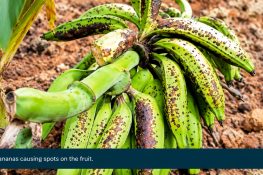
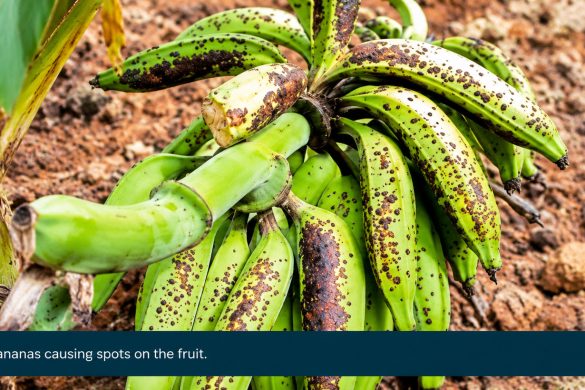
The tea mosquito bug is a major pest affecting a wide range of crops including tea, cashew, cocoa, avocado, horse gram, moringa, pepper, tamarind, and neem. Both adult bugs and nymphs suck sap from fruits, causing visible cracks and spots on the fruit surface.
These pests attack tender leaves, stems, and fruits. As a result, the leaves and stems turn brown while black fungal spots form on the surface of the fruits, leading to significant crop loss if left unmanaged.
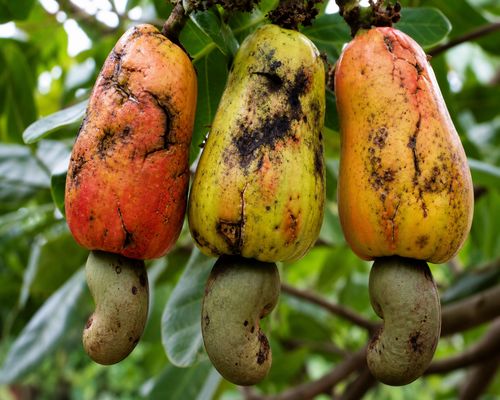
This pest poses a serious threat across a variety of plantation and horticulture crops. Recognising which crops are vulnerable is the first step toward timely intervention.
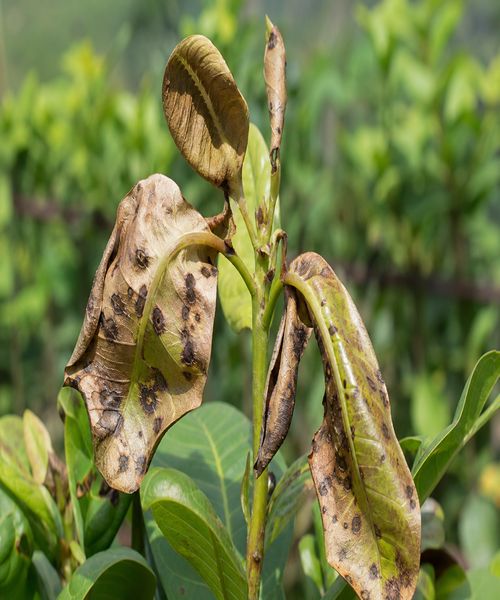
Identifying an infestation early can prevent widespread damage. Watch for these key signs:
- 🟤 Browning of leaves and stems due to sap-sucking activity
- ⚫ Black fungal spots on the surface of fruits
- 🔴 Cracks and spots appearing on fruit surfaces
- 🌿 Damage concentrated on tender leaves, stems, and young fruits
A combination of cultural, mechanical, and chemical control measures gives the best results in managing this pest effectively.
🌾 Cultural Practices
- ✅ Destroy the damaged parts of the plant as soon as infestation is noticed.
- ✅ Pruning the crops helps sunlight reach the leaves and reduces the pest’s hiding places.
- ✅ Bagging the fruits of closely planted crops provides protection from tea mosquito bugs and other sucking pests.
🪤 Mechanical Control
- ✅ Set up 40–50 yellow sticky traps per acre to monitor and trap adult bugs effectively.
💧 Spray Schedule (Starting from Flowering Stage)
Apply one of the following sprays once a month to reduce pest infestation and resulting damage:
- 🔵 Ekarolak — 2 ml per liter of water
- 🔵 Lambda-cyhalothrin — 1 ml per liter of water
- 🌿 Neem-based pesticide — 2 ml per liter of water
🌾 Organic Repellent Application on Nuts
- 🟢 Apply 3% Karinochiyalisathi on the nuts to repel the pest.
- 🟢 Apply 5% fish oil on the nuts as an effective organic deterrent.
| Control Method | Action / Product | Dosage / Rate |
|---|---|---|
| Cultural | Destroy damaged plant parts | As required |
| Cultural | Pruning for sunlight penetration | Periodic |
| Cultural | Fruit bagging (closely planted crops) | All fruits |
| Mechanical | Yellow sticky traps | 40–50 traps/acre |
| Chemical Spray | Ekarolak | 2 ml/litre (monthly) |
| Chemical Spray | Lambda-cyhalothrin | 1 ml/litre (monthly) |
| Organic Spray | Neem-based pesticide | 2 ml/litre (monthly) |
| Organic Repellent | Karinochiyalisathi on nuts | 3% concentration |
| Organic Repellent | Fish oil on nuts | 5% concentration |
Key Takeaway: Starting spray applications from the flowering stage and combining cultural, mechanical, and organic methods is the most effective strategy to keep tea mosquito bug populations under control and minimise crop damage.
➕ What crops are most affected by tea mosquito bug?
Tea mosquito bug is a major pest of tea, cashew, cocoa, avocado, horse gram, moringa, pepper, tamarind, and neem. It targets tender leaves, stems, and fruits, causing browning, cracking, and black fungal spots that lead to significant yield loss if not managed early.
➕ How do I identify a tea mosquito bug infestation?
Key signs include browning of leaves and stems, cracks and spots on fruit surfaces, and black fungal spots caused by secondary infections. Both adult bugs and nymphs are found on tender plant parts, especially during the fruiting season. Early identification helps prevent widespread crop damage.
➕ How many yellow sticky traps should be used per acre?
It is recommended to set up 40 to 50 yellow sticky traps per acre. These traps are effective for monitoring and capturing adult tea mosquito bugs, helping farmers gauge infestation levels and take timely action before the pest population increases.
➕ When should I start spraying for tea mosquito bug control?
Spray application should begin from the flowering stage of the crop. Applying recommended pesticides once a month from this stage helps reduce pest populations before fruits develop, protecting the crop through its most vulnerable growth phase.
➕ What organic methods can be used to repel tea mosquito bug?
Applying 3% Karinochiyalisathi or 5% fish oil directly on the nuts is an effective organic approach to repel tea mosquito bugs. In addition, neem-based pesticide at 2 ml per liter can be used as a monthly spray, making it a safe choice for organic farming systems.
➕ What is the dosage of Lambda-cyhalothrin for tea mosquito bug control?
Lambda-cyhalothrin should be sprayed at a dosage of 1 ml per liter of water, once a month starting from the flowering stage. It is one of the recommended chemical options alongside Ekarolak and neem-based pesticides for effective pest management.
➕ Does pruning really help in controlling tea mosquito bug?
Yes, pruning is an effective cultural control measure. It allows sunlight to penetrate the canopy, which creates an unfavourable environment for the pest and reduces its hiding places. Combined with removal of damaged plant parts, pruning significantly lowers the risk of a severe tea mosquito bug outbreak.
➕ Can fruit bagging protect against tea mosquito bug?
Yes, bagging the fruits of closely planted crops provides a physical barrier against tea mosquito bugs and other sucking pests. It is particularly useful in high-density plantations where pests can spread rapidly between adjacent plants.