Suchitra B, Rahul Raj. M
The invasive plant called Cat’s Claw, which is becoming a craze for flower lovers in Kerala, is very harmful to the environment.
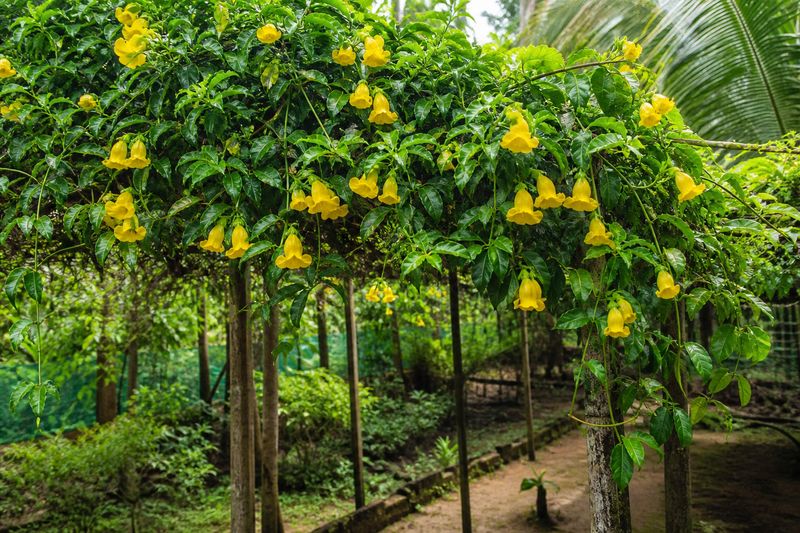
The Cat’s Claw plant, with its beautiful yellow flowers, is filling the eyes and minds of Malayalis like spring. Cat’s Claw (Dolichandra unguis-cati) is a vine that has recently migrated to Kerala from the American tropical regions.
This plant got the name Cat’s Claw because it spreads and climbs using tendrils that resemble a cat’s claw.
Cat’s Claw, which grows well in our climate, will flower twice if it grows. The sight of it growing with yellow flowers, both full and bell-shaped, is very beautiful.
On a green pandal, once the green leaves have bloomed, the flowers will remain for up to 10 days without fading or wilting.
🪴 These plants with yellow flowers are not just for gardens; they are also in demand. The Onam market for this plant is in full swing in nurseries in Kerala.
Cat’s Claw, which is one of the invasive plants that migrate from their ecosystem to other countries, grows and spreads there, creating environmental problems and becoming a threat to biodiversity, has been banned in many countries.
Most tropical countries, including Africa, are taking measures to curb the impact of the spread of invasive plants on native flora and the global economy.
The National Green Tribunal Southern Zone Bench’s 2019 list of invasive plants has included Cat’s Claw as a Category 1 plant.
In Kerala’s climate, this attractive vine spreads rapidly.
Since they spread and grow through their tubers, even if they are cut down or dug up, these tubers will sprout from the soil and reproduce again.
Very small seeds are carried by the wind to other places and spread over that entire area.
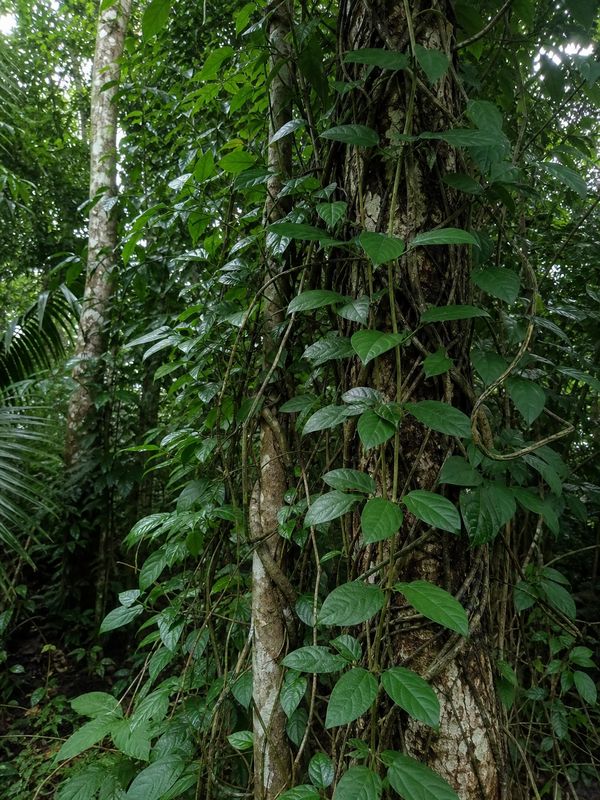
In Kerala’s climate, this attractive vine spreads rapidly, wrapping around the trunks of other plants and growing like a fungus, preventing them from getting sunlight, thereby stunting the growth of native plants.
Very small seeds are carried by the wind to other places and spread over that entire area, adversely affecting the growth of other plants.
Once it grows uncontrollably, it is very difficult to eradicate this plant from that area.
🧪 Certain chemicals (Allelochemicals) released from these plants also hinder the flowering and growth of other plants and prevent the seeds of other plants from germinating.
Silpur Bedbi (Kammal Poovu), which migrated to Kerala a while ago, has now spread uncontrollably on a large scale.
🌍 When selecting ornamental plants, one must ensure they are environmentally friendly.
Address: *Research scholar, College of Agriculture, Vellayani. Phone: 8848696434
**MAT Foundation Officer, Wayanad. Phone: 9947231642