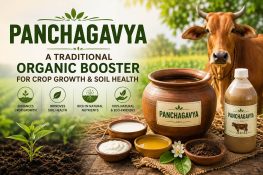
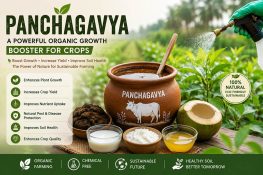
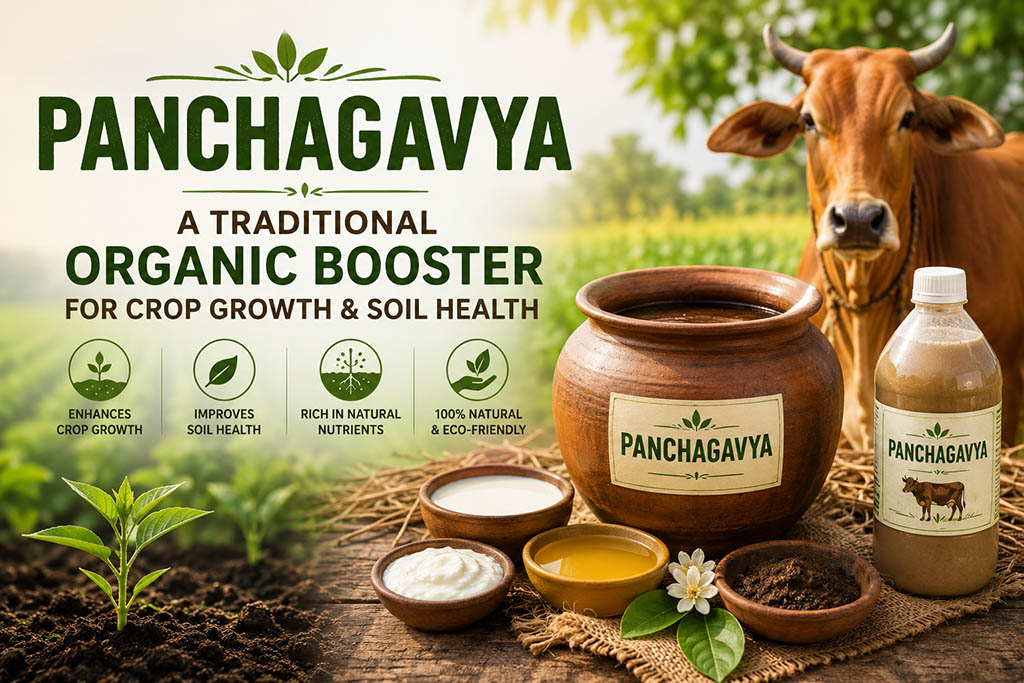
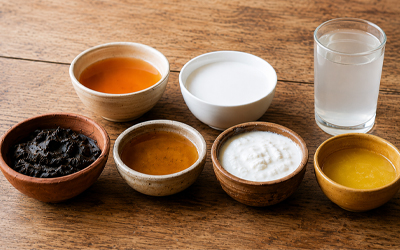
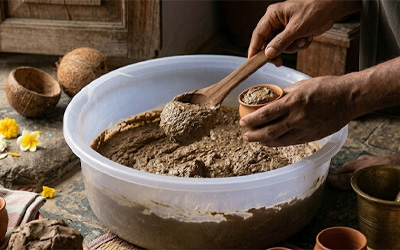
📌 What is Panchagavya?
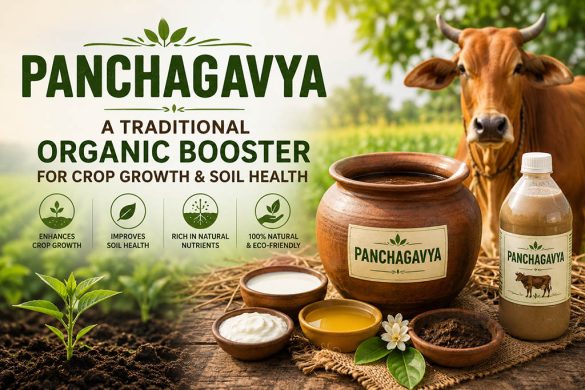
- Cow dung
- Cow urine
- Milk
- Curd
- Ghee
- Coconut water
It is widely used in organic farming to improve plant growth, yield, and soil health. According to the research , Panchagavya acts as a natural growth promoter and soil enhancer.
🌿 Why Organic Farming Matters
Organic farming avoids synthetic chemicals and focuses on:
- Improving soil fertility
- Promoting biodiversity
- Using natural inputs
- Producing healthier crops
👉 Panchagavya plays a major role in this system as a multi-benefit organic input.
⭐ Key Benefits of Panchagavya (Research Insights)
Boosts Plant Growth
- Enhances root development
- Improves branching and flowering
- Increases plant vigor
💡 Best results seen when applied during branching and flowering stages.
Improves Crop Yield
- Higher number of fruits and pods
- Increased grain and biomass yield
- Better harvest index
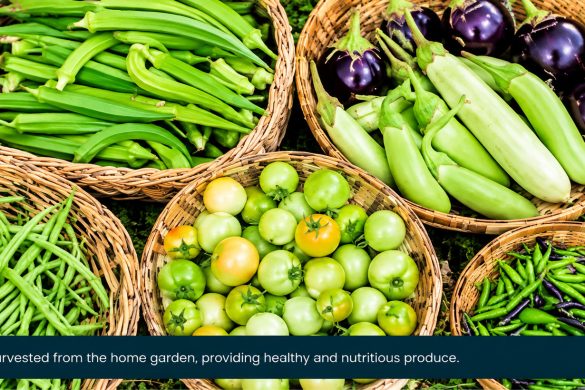
📊 Studies show yield improvements in crops like:
- Tomato
- Blackgram
- Soybean
Enhances Nutrient Uptake
- Improves absorption of:
- Nitrogen (N)
- Phosphorus (P)
- Potassium (K)
- Zinc (Zn),Iron (Fe)
👉 Leads to stronger plants and better productivity.
Natural Pest & Disease Protection
- Contains antimicrobial properties
- Helps reduce pest attacks
- Improves plant immunity
Improves Soil Health
- Increases beneficial microorganisms
- Enhances soil fertility
- Improves water retention
📌 Contains microbes like:
- Azotobacter
- Phosphobacteria
- Pseudomonas
Improves Crop Quality
- Better taste and aroma
- Higher nutritional value
- Increased shelf life
📊 Example:
- Higher vitamin C and lycopene in tomatoes
- Increased oil and protein in soybean
📊 Best Practices for Using Panchagavya
✅ Ideal Application Stage
- Branching stage
- Flowering stage
- Best results when applied at both stages
📏 Recommended Dosage
- 3% to 6% solution works best
- 3–4% ideal for most crops
- 6% effective for crops like capsicum
🌿 Method of Application
- Foliar spray (spraying on leaves)
- Apply during early morning or evening
📈 Effects on Crop Performance
🌱 Vegetative Growth
- Increased plant height
- More leaves and branches
- Higher chlorophyll content
🌾 Yield Attributes
- More pods per plant
- Increased fruit size
- Higher grain yield
🧬 Quality Parameters
- Improved protein content
- Increased oil content
- Better biochemical composition
⚠️ Limitations to Consider
- Results may vary based on:
- Crop type
- Soil condition
- Climate
- Requires proper preparation and application
- Scientific validation is still evolving

🔮 Future Scope
- More research needed for:
- Crop-specific dosage
- Long-term soil impact
Wider adoption in organic farming systems
Panchagavya is a powerful and eco-friendly organic solution that enhances plant growth, improves crop yield and quality, strengthens soil health, and promotes sustainable farming practices naturally.
With its rich blend of beneficial nutrients and microorganisms, Panchagavya contributes to better flowering, fruiting, disease resistance, and long-term agricultural sustainability.
👉 It is a key input for sustainable and chemical-free farming.
📎 Full Research Paper (Case Study)
👉 Read the complete study here: https://www.biochemjournal.com/archives/2024/vol8issue6S/PartE/S-8-6-34-533.pdf
❓ FAQ
What is Panchagavya used for in agriculture?
What is the ideal dosage of Panchagavya?
When should Panchagavya be applied?
It is best applied during the branching and flowering stages for maximum effectiveness.