Written by Dr. C.N. Ravishankar
Malappuram: The Central Government’s National Institute of Fisheries Post Harvest Technology and Training (NIPHATT) has come up with a green formula as an alternative to overcome the scarcity of fish from the sea.
Lakshadweep, Andaman, and even the coasts of Kerala are becoming rich with seaweed. According to a United Nations Food and Agriculture Organization (FAO) report, 221 types of seaweed are used for commercial purposes.
Among these, the most widely used are species belonging to the groups ‘Kappaphycus’, ‘Eucheuma’, ‘Gracilaria’, ‘Sargassum’, ‘Laminaria’, and ‘Undaria’. From these, we get Agar, Alginate, and other industrial products. Seaweed is used as food in many countries.
🌱 Key point: Seaweed is not only a marine resource; it is also a food, nutrition, industry, and livelihood opportunity for coastal communities.
Seaweed is a treasure trove of nutrients, often hailed as the ‘superfood of the sea’.
Minerals: It is a natural source of iodine. It also contains several other essential minerals.
Protein: It is a good source of protein and amino acids.
Antioxidants: It contains carotenoids, flavonoids, and other antioxidants.
It is also rich in Omega-3 fatty acids, iron, calcium, magnesium, zinc, vitamins A, C, E, and K, fiber, and polysaccharides. ‘Ulva lactuca’, known as ‘sea lettuce’, is rich in dietary fiber.
There are around 11,000 species of seaweed worldwide. Among these, 844 are found in India. Edible seaweeds are abundant here. Two species, Kappaphycus alvarezii and Gracilaria edulis, are cultivated commercially.
species of seaweed worldwide
seaweed species found in India
species cultivated commercially
return possible through value addition, according to a government assessment
To ensure better prices for fishermen for their catch and to provide them with a sustainable income throughout the year, value addition is essential. Many companies have come forward for this. According to an assessment by the government, value addition can provide a return of up to ten times the cost.
Therefore, the country has prepared a special project for value-added seaweed products, including food items that can be consumed directly, known as ‘Functional Foods’.
📌 NITI Aayog, in a special meeting held in 2024, has instructed to develop new and high-value products from seaweed and to create a value chain for them. The Pradhan Mantri Matsya Sampada Yojana (PMMSY) also provides financial assistance for this. The ‘Seaweed Mission’ is also making strides.
Derivatives from seaweed such as Agar, Carrageenan, and Alginates are used for thickening and stabilization in food products. They are also used in various fields like making biodegradable films, biostimulants for plants, and in medicines. They also have a significant presence in animal and fish feed.
The Incubation Centre for Seaweeds (INP) at the Central Government’s National Institute of Fisheries Post Harvest Technology and Training (NIPHATT) in Kochi has developed over a dozen value-added products.
NIPHATT has the technology and facilities for all stages, from harvesting to creating value-added products, including post-harvest technology. A project has also been initiated with the goal of developing a new product every three months.
NIPHATT is also actively involved in the ‘Blue-Green Economy’ initiative of the Central Government. As part of this, the institute has announced a special project called ‘Clean Sea 2025’ which will be implemented in five states including Kerala and Lakshadweep from August 25.
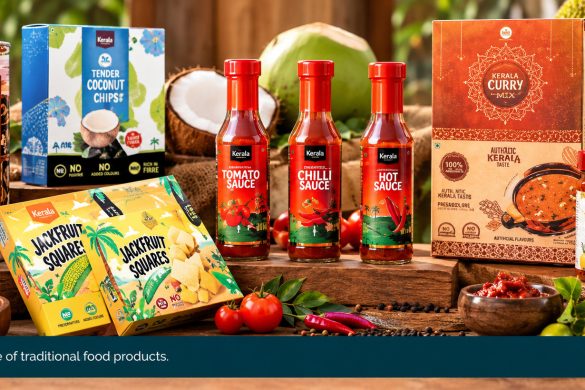
NIPHATT has developed several ready-to-eat and value-added seaweed products that combine nutrition, taste, and market potential.
Seaweed Pineapple Jam: Made from seaweed, pineapple, and other ingredients. A good source of energy. It is rich in nutrients and antioxidants.
Seaweed Tomato Ketchup: Developed by adding seaweed extract to tomato ketchup. Highly nutritious. A superior substitute for regular ketchup.
Seaweed Soya Cutlet: A ready-to-eat product made by adding seaweed to soy. Good for health, this cutlet can be served as an evening snack.
Seaweed Cracker: Tasty and nutritious. Seaweed crackers can be served with various dips.
Seaweed Wafer: Can be served fried or roasted. A highly nutritious snack.
Fish Mince: Ready-to-eat. About 3 percent of seaweed is used in this.
Seaweed Kheer: A delicious and nutritious dessert that can be served after a meal.
Seaweed Sorbet: It is a dessert rich in taste and nutrients. It is sweet and can be served cold.
📷 Union Minister for Fisheries and Dairy Development Parshottam Rupala, A.P. Shinde and other dignitaries when they visited the NIPHATT stall. Union Fisheries Secretary Dr. Abhilaksh Likhi, Director Dr. C.N. Ravishankar introducing the collection of seaweed products.
Like other products, it is also available in ready-to-eat form. A tasty and high-quality food item. NIPHATT, under the Central Ministry of Fisheries, provides technical assistance and support for all these products.
The general term for macroscopic marine algae, which grow in the seas, oceans, and salty backwaters, is ‘commercial seaweed’. Their body is not divided into roots, stems, and leaves. Instead, they have parts called holdfasts, stipes, and blades.
☎️ For more information about the seaweed project by the Central Government’s NIPHATT: 0484-2361317, 8078081953
What makes seaweed a superfood of the sea?
Seaweed is called a superfood of the sea because it is rich in iodine, protein, amino acids, Omega-3 fatty acids, iron, calcium, magnesium, zinc, vitamins A, C, E, and K, fiber, polysaccharides, carotenoids, flavonoids, and other antioxidants. It is also used as food in many countries.
Which seaweed species are commercially cultivated in India?
India has 844 seaweed species, and edible seaweeds are abundant. Two species, Kappaphycus alvarezii and Gracilaria edulis, are cultivated commercially. These species are important for seaweed farming, value-added products, and industrial uses such as Agar, Carrageenan, and Alginates.
How can seaweed help fishermen earn sustainable income?
Value addition can help fishermen receive better prices and sustainable income throughout the year. According to a government assessment, value addition in seaweed can provide returns of up to ten times the cost. Functional foods and ready-to-eat products create new market opportunities for coastal communities.
What seaweed products has NIPHATT developed?
NIPHATT has developed over a dozen value-added seaweed products, including seaweed pineapple jam, tomato ketchup, soya cutlet, crackers, wafers, fish mince, kheer, and sorbet. These products focus on nutrition, taste, convenience, and ready-to-eat formats for wider consumer acceptance.
What are Agar, Carrageenan, and Alginates used for?
Agar, Carrageenan, and Alginates are derivatives from seaweed used for thickening and stabilization in food products. They are also used in biodegradable films, plant biostimulants, medicines, animal feed, and fish feed, making seaweed valuable beyond direct human consumption.
What is NITI Aayog’s role in seaweed development?
NITI Aayog, in a special meeting held in 2024, instructed the development of new and high-value products from seaweed and the creation of a value chain. The Pradhan Mantri Matsya Sampada Yojana also provides financial assistance, while the Seaweed Mission is making strides.
How can I contact NIPHATT for the seaweed project?
For more information about the seaweed project by the Central Government’s National Institute of Fisheries Post Harvest Technology and Training, NIPHATT, the contact numbers provided are 0484-2361317 and 8078081953. NIPHATT also provides technical assistance and support for seaweed products.