👨⚕️ Dr. Joby George
Veterinary Doctor, Pet Treat Veterinary Speciality Hospital, Kadavanthra, Ernakulam.
❓ Reader question: I see blood inside my dog’s ear. The ear is also swollen and looks like a blister. What is the problem? (Preethilekshmi)
Chithra Subin, Perumbavoor
The specific condition seen in dogs’ ears is called an Aural Haematoma. It is caused when the space between the inner and outer skin of the ear fills with blood, causing the ear to swell up as if it were a festering blister.
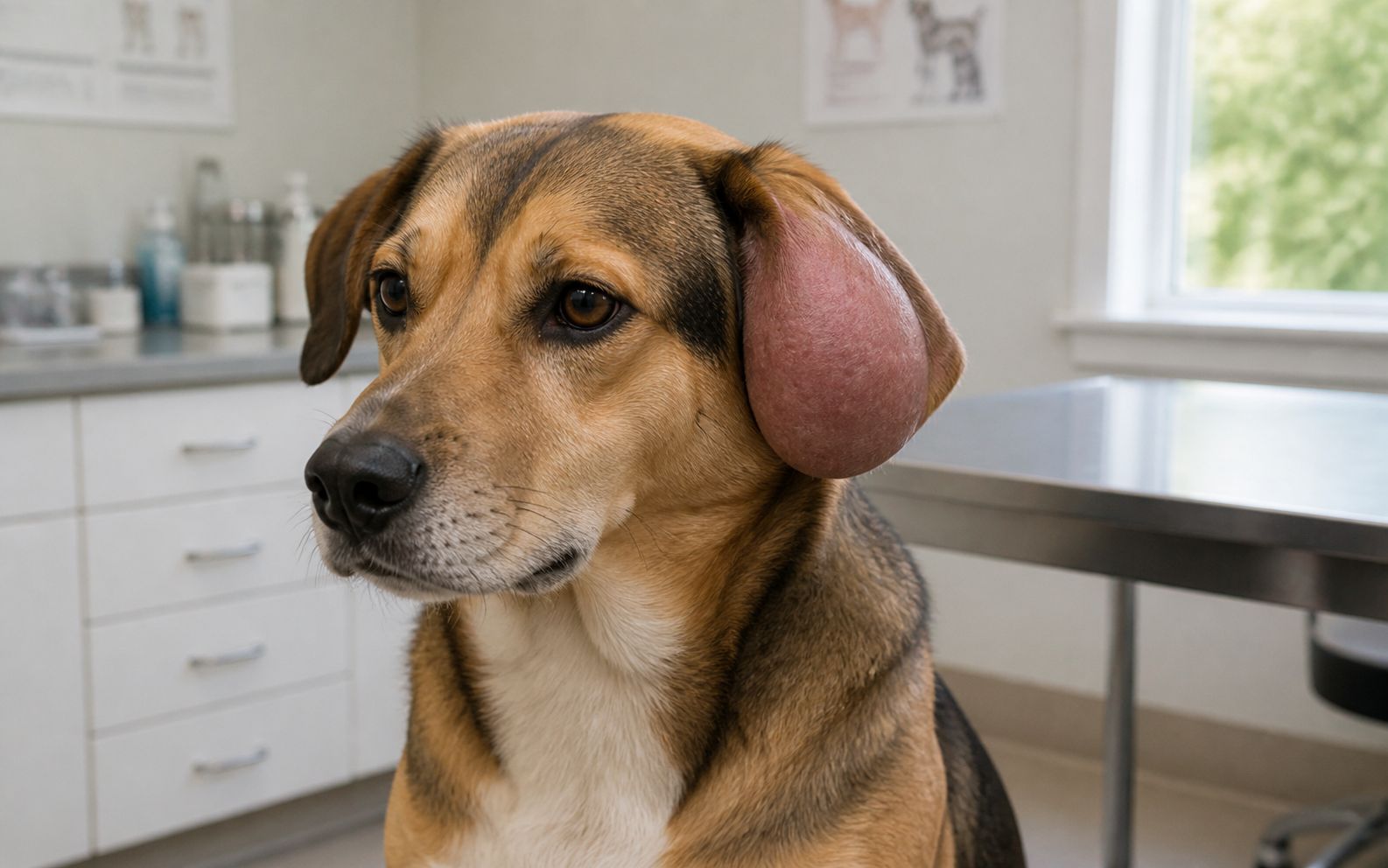
An aural haematoma happens when blood collects in the ear flap rather than flowing out of the body. This trapped blood makes the ear look swollen, soft, and blister-like.
🔎 Key point: However, this blood does not flow out of the body. This is what causes the skin to swell.
The causes include ear infections, mite infestations (ear mites), and skin allergies. When a dog with these conditions continuously scratches its ear vigorously with its paws or shakes its head forcefully, the small blood vessels in the ear flap can break.
Ear infections can trigger irritation, scratching, and repeated head shaking.
Mite infestations, especially ear mites, are another common cause.
Skin allergies may make the dog keep scratching the ear with its paws.
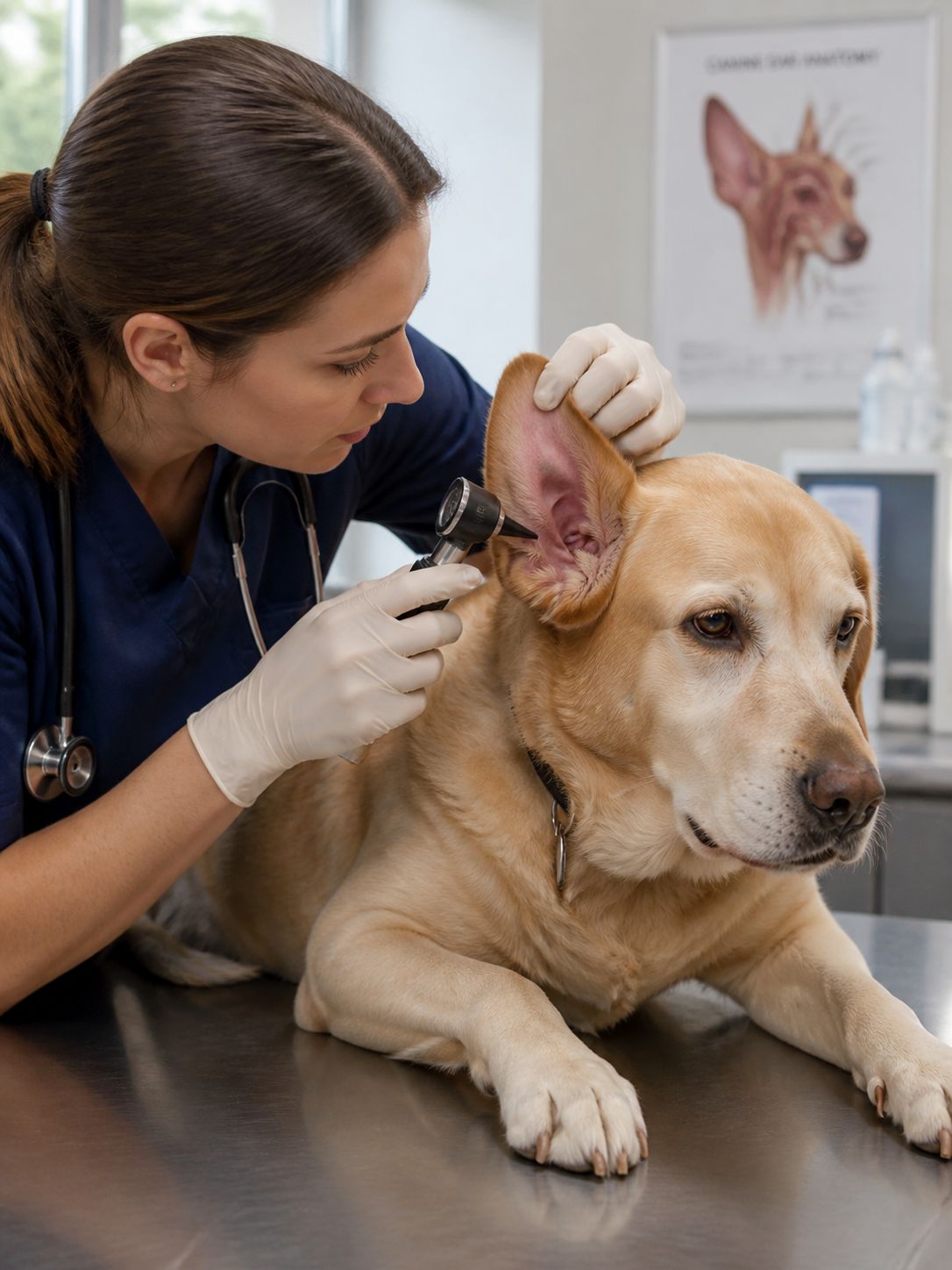
It is best to have a veterinary doctor diagnose the severity of the condition and provide treatment.
⚠️ Important: Depending on the cause and severity of the disease, the following treatment methods can be adopted.
For very small hematomas, ointments can be used. However, there is a risk that it could become a large hematoma or that the shape of the ear could be altered.
The blood can be removed via surgery or by using a syringe. Sutures may be applied and a pressure bandage tied to help the skin reattach.
Treating the underlying medical condition can prevent this problem from recurring.
If blood is seen inside a dog’s ear and the ear is swollen like a blister, the problem may be Aural Haematoma. Because ear infections, ear mites, skin allergies, scratching, and forceful head shaking may be involved, veterinary diagnosis and treatment are the safest next steps.